Bank ATM Redesign
Role
Product Designer
Year
2020
Client
Gazprom Bank
Platform
ATM Interface
Overview
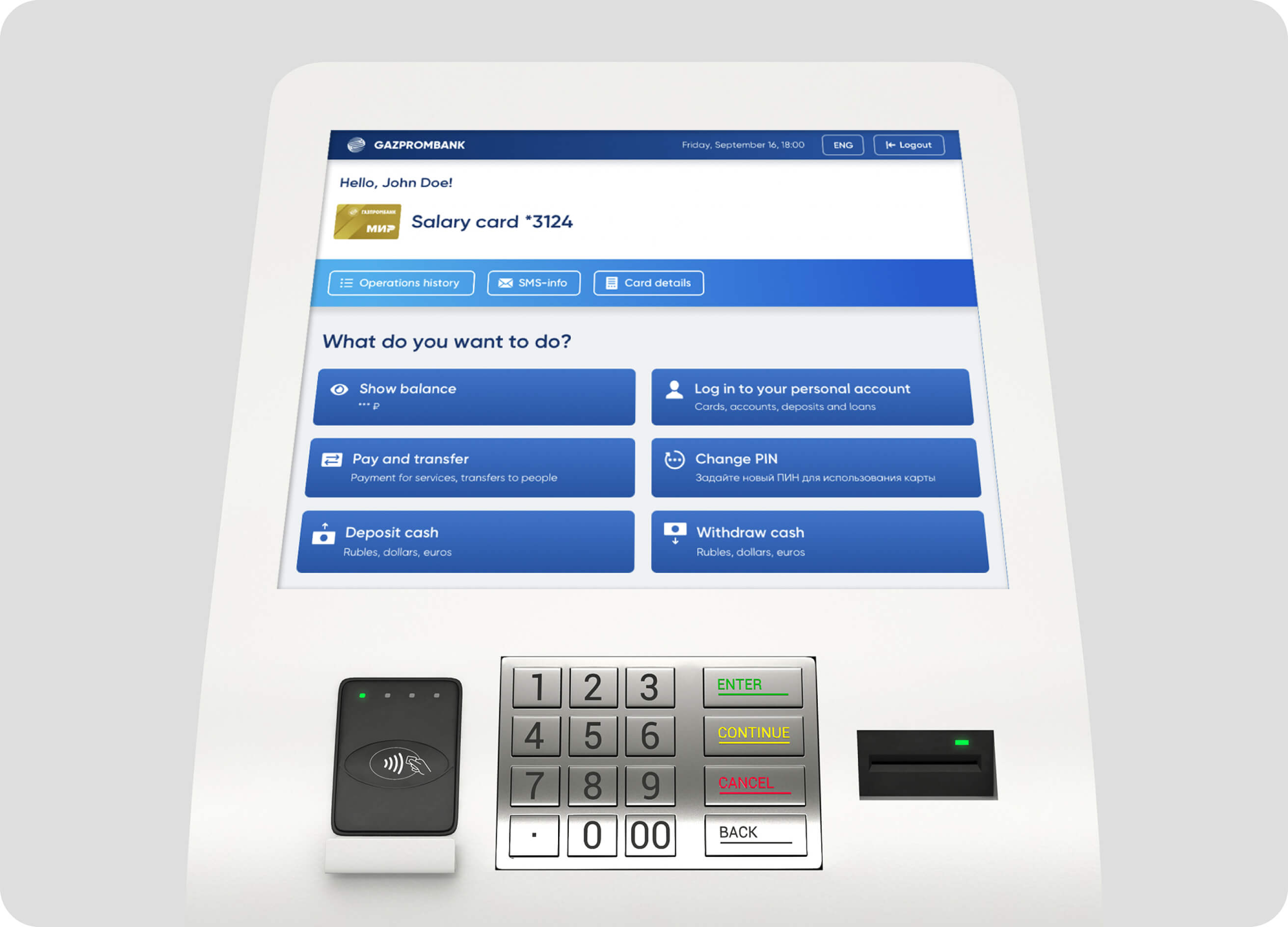
ATM Design Upgrade was a banking interface redesign focused on making everyday ATM operations clearer, faster, and more accessible for a wide range of customers. The goal was to modernize the ATM experience for a top-10 bank by redesigning core user scenarios, improving interface readability, and creating a consistent screen system that could scale across hundreds of machines.

Problem & Solution
Problem
The previous experience relied on fragmented patterns, dense screens, and interaction choices that were not always clear to users. Some controls created confusion during testing, especially when several action buttons appeared on the same screen. The design challenge was to simplify complex banking scenarios without removing important financial information or reducing user control.
Solution
The solution used high-contrast visuals, larger fonts, simplified layouts, structured templates, and scenario-based screen logic. Instead of designing isolated screens, the experience was rebuilt around real user tasks and tested through rapid iterations. This made the interface easier to understand, easier to scale, and more reliable for both customers and internal teams.

1
Research & Competitive Audit
Analyzed local and international ATM experiences together with a UX researcher to understand common interaction patterns, usability gaps, and expectations around banking self-service.
2
Scenario Mapping
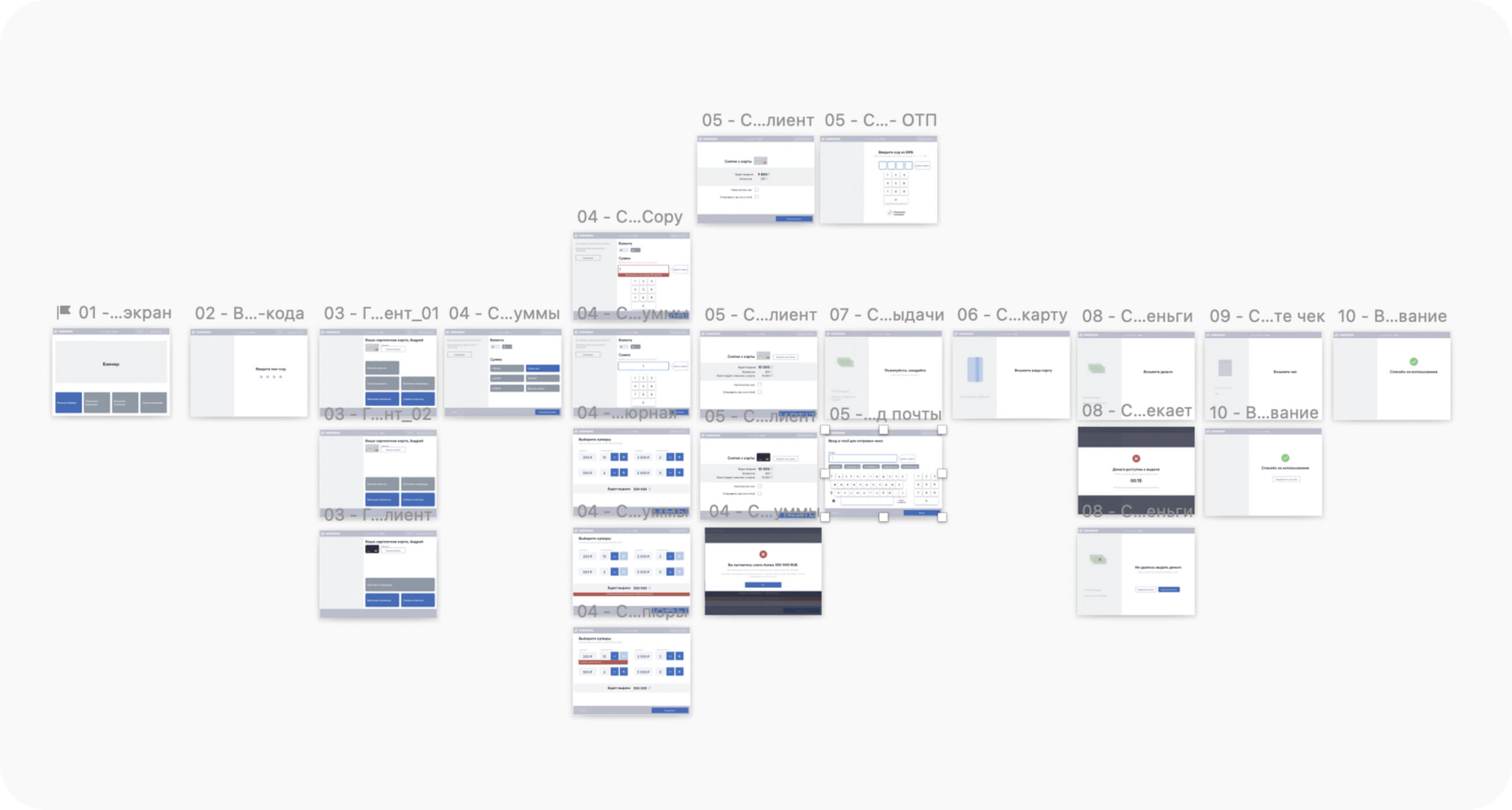
Identified and prioritized more than 10 core ATM scenarios based on user importance and business relevance. These scenarios became the foundation for the prototype and screen structure.
3
Prototyping
Created interface concepts and prototypes for key ATM flows, translating complex banking actions into step-by-step experiences that users could understand quickly.
4
Accessible Design Concept
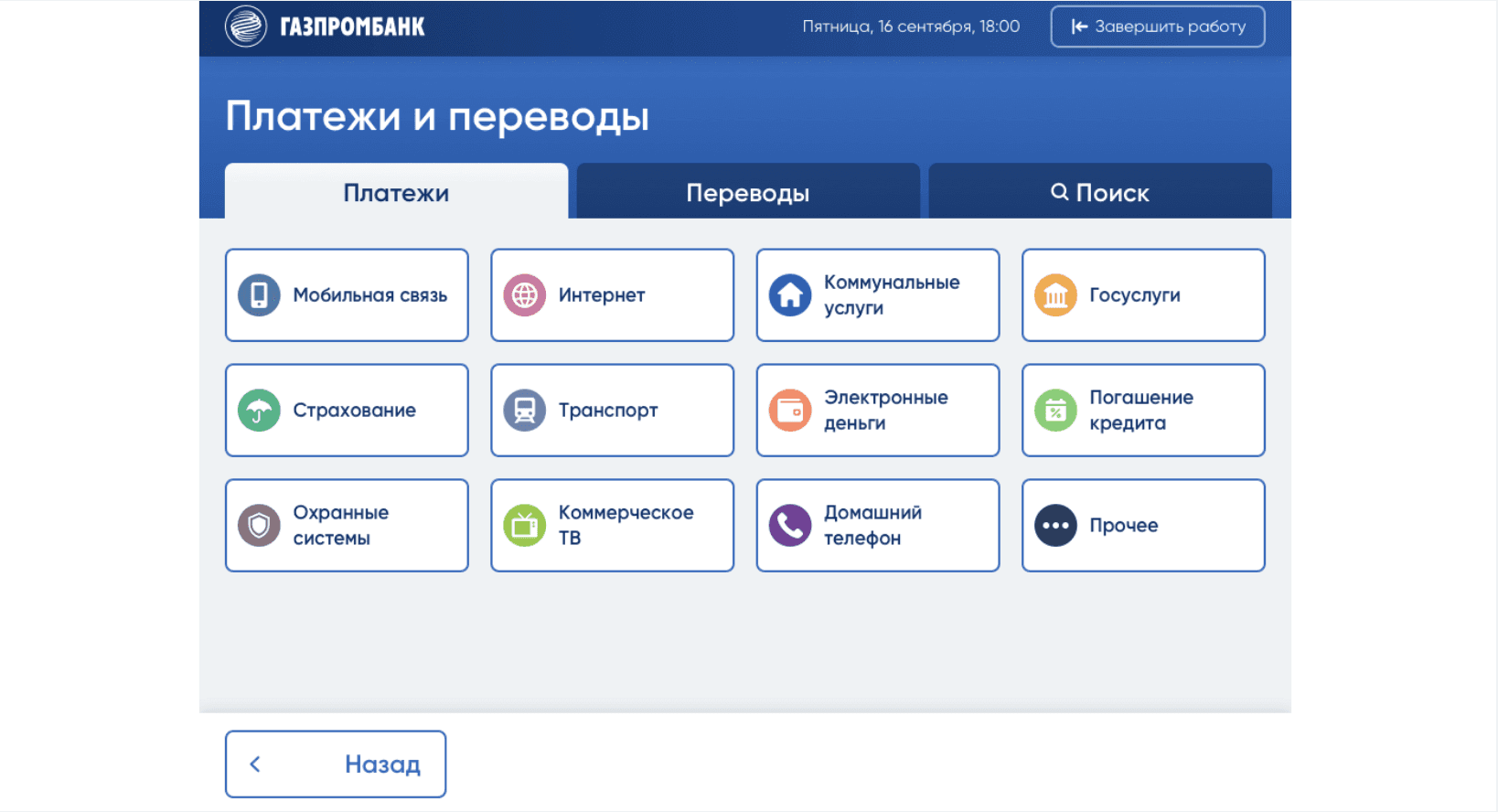
Developed a visual direction focused on accessibility: bright colors, large typography, strong contrast, clear spacing, and simplified navigation patterns.
5
Templates & Screen System
Created reusable templates for different screen types, making it possible to assemble new screens faster while keeping the interface consistent across the full ATM experience.
6
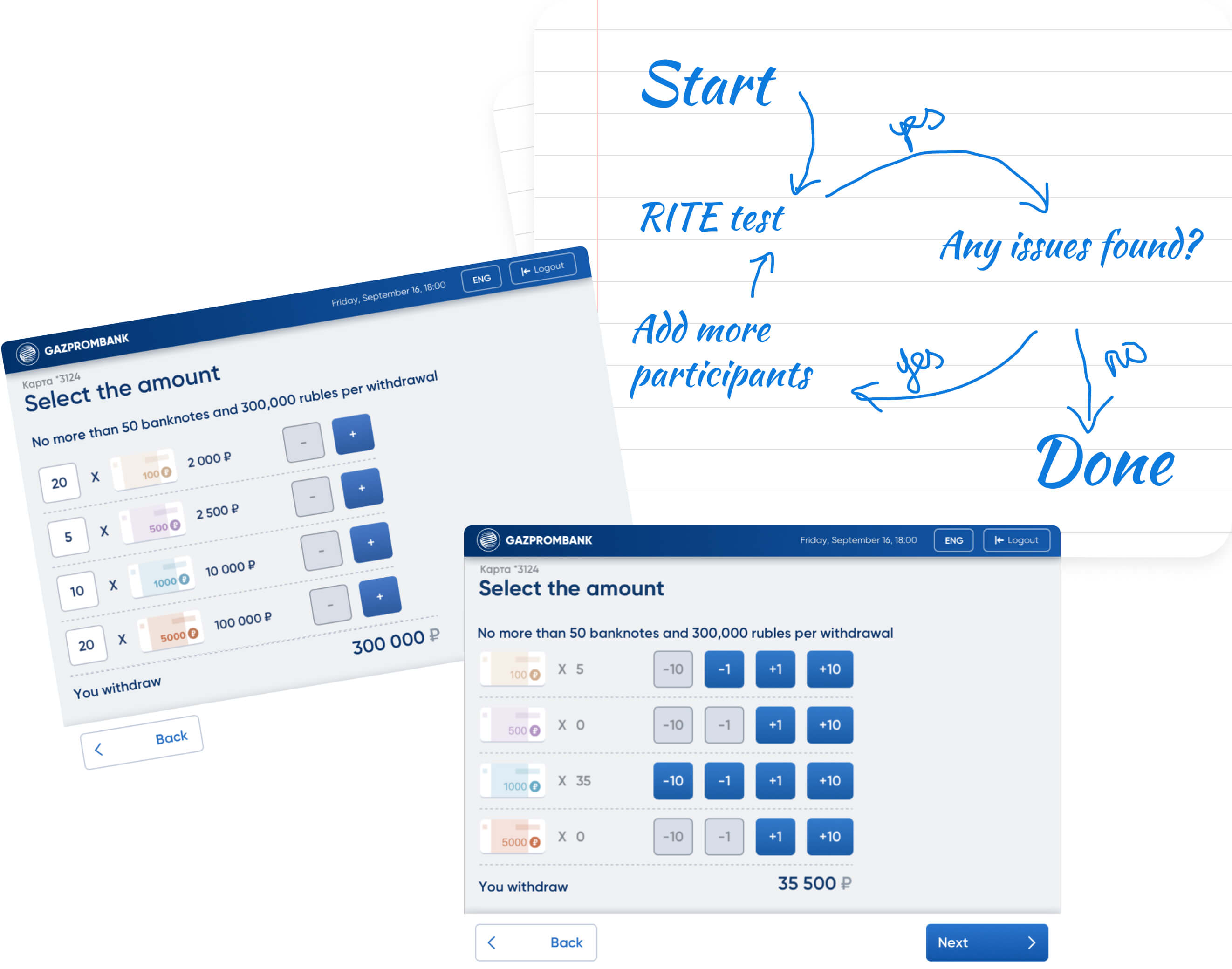
RITE User Testing
Used Rapid Iterative Testing and Evaluation to test the design, identify usability issues, update the prototype quickly, and validate improved versions with users.
Designing for a broad audience with different ages, digital habits, and levels of financial confidence.
Maintaining clarity across more than 100 ATM screens without creating visual or interaction inconsistency.
Reacting quickly to usability issues during RITE testing and improving the design without slowing down the project.
Aligning researchers, stakeholders, copywriters, illustrators, and engineers around one scalable interface system.
I learned how important it is to reduce cognitive load in environments where users need to act quickly and avoid mistakes. The work also showed the value of scenario-based design: instead of treating screens as separate UI pieces, the product became stronger when every screen was connected to a real user task. The main takeaway was that accessibility and consistency are not visual details in banking products. They are core parts of trust, usability, and operational scale.
