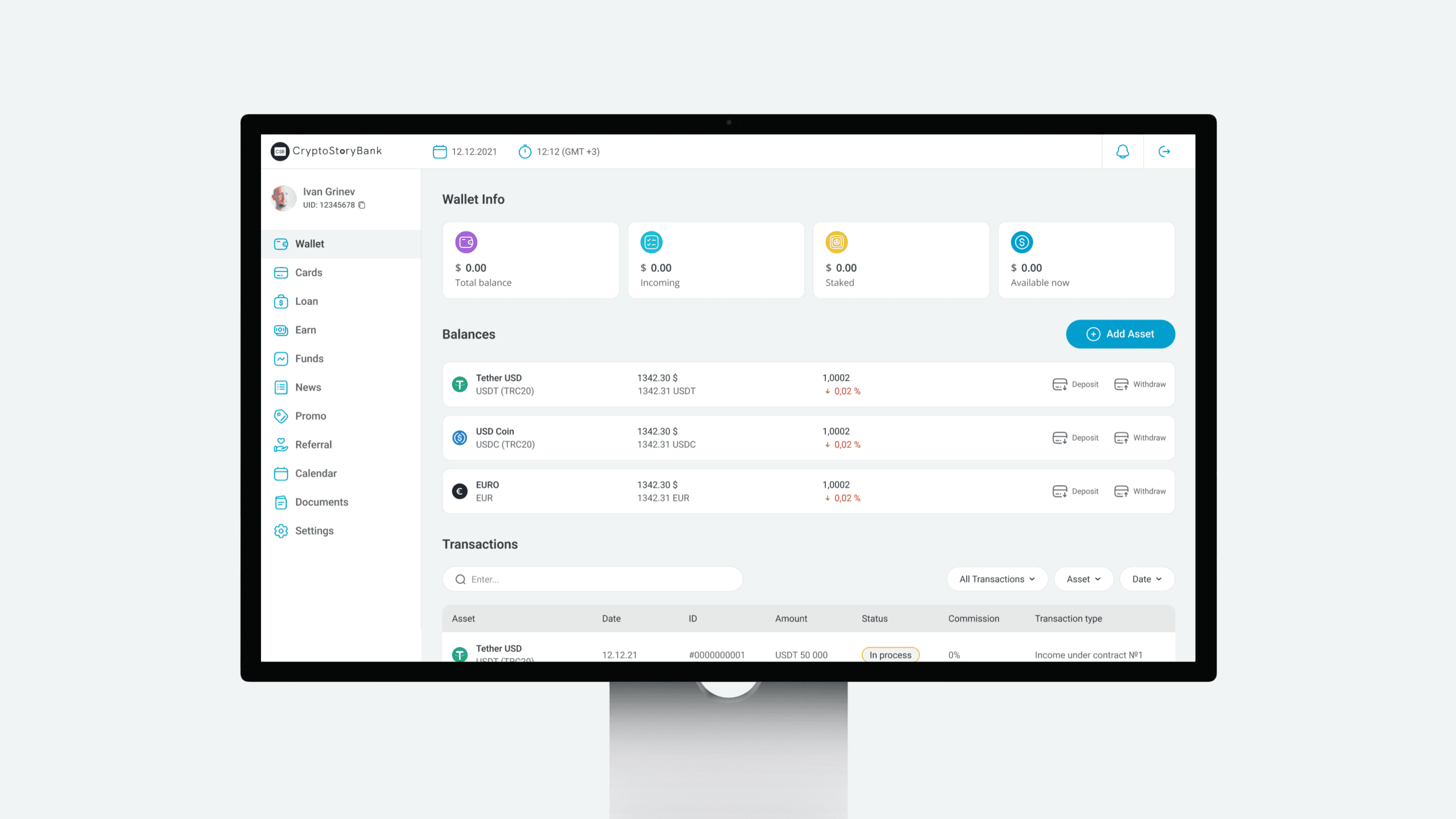
Bank's Business App
Role
Product Designer
Year
2024
Client
Alfa Bank (NDA Project)
Platform
iOS, Android, Web
Overview
This project focused on creating and scaling design patterns for a top-3 bank’s business application across iOS, Android, and Web. The main goal was to improve how cross-platform product teams design complex banking scenarios by creating shared standards, reusable patterns, and clearer design processes. Instead of every designer solving similar problems differently, the product team needed a system that made interfaces more consistent, faster to design, and easier to review.

Problem & Solution
Problem
The business app had many teams working across different platforms, which created inconsistency in how similar scenarios were designed.
Designers had to make repeated decisions around navigation, dialogs, sheets, forms, flows, and interaction patterns. Without shared standards, similar product problems could be solved differently across iOS, Android, and Web. This slowed down design work, made reviews less efficient, and increased the risk of fragmented user experiences.
The design challenge was to create a pattern system that improved consistency without forcing every platform to behave identically.
Solution
The solution was a cross-platform design pattern framework for the bank’s business app. The system defined reusable standards for common product scenarios, supported platform-specific behavior, and gave designers clear guidance for choosing the right pattern. Alongside the pattern library, the project introduced onboarding materials, reviews, workshops, and design sprints to help teams apply the standards consistently.
1
Pattern Prioritization
Defined the most important patterns for cross-platform teams, focusing on recurring product scenarios across iOS, Android, and Web.
2
Design Standards
Created reusable standards that helped designers choose appropriate components, layouts, interaction models, and platform-specific behaviors.
3
Reviews & Workshops
Set up design reviews, workshops, and alignment sessions to make sure the patterns were understood and applied consistently across teams.
4
Product & Team Audit
Reviewed how different teams were solving similar design problems across the business app. The goal was to identify duplicated work, inconsistent patterns, and areas where designers lacked clear decision rules.
5
Continuous Improvement
Updated the standards based on team feedback, product needs, and real usage across active business app scenarios.
Creating consistency across iOS, Android, and Web without ignoring platform-specific UX patterns.
Turning abstract design principles into practical, reusable rules that teams could actually apply.
Improving design speed without reducing product quality or usability.
Building standards for complex business banking scenarios where flows are often dense, regulated, and high-risk.
Making the pattern system useful for both daily design work and long-term product scalability.
The main takeaway was that scalable product design depends on clear decision rules, shared language, and systems that support both product quality and team efficiency.