Smart Crypto Wallet
Role
Product Designer
Year
2020
Client
Hashsense
Platform
Web
Overview
Hashsense is a DeFi analytics and smart wallet platform that helps users make informed investment decisions by tracking top traders, analyzing their performance, and allowing users to safely replicate trading strategies. The platform combines on-chain data, AI-driven analytics, and copy-trading tools within a single intuitive dashboard. My role was Product Designer — responsible for end-to-end design from research and information architecture to interaction design, high-fidelity prototypes, and usability testing.
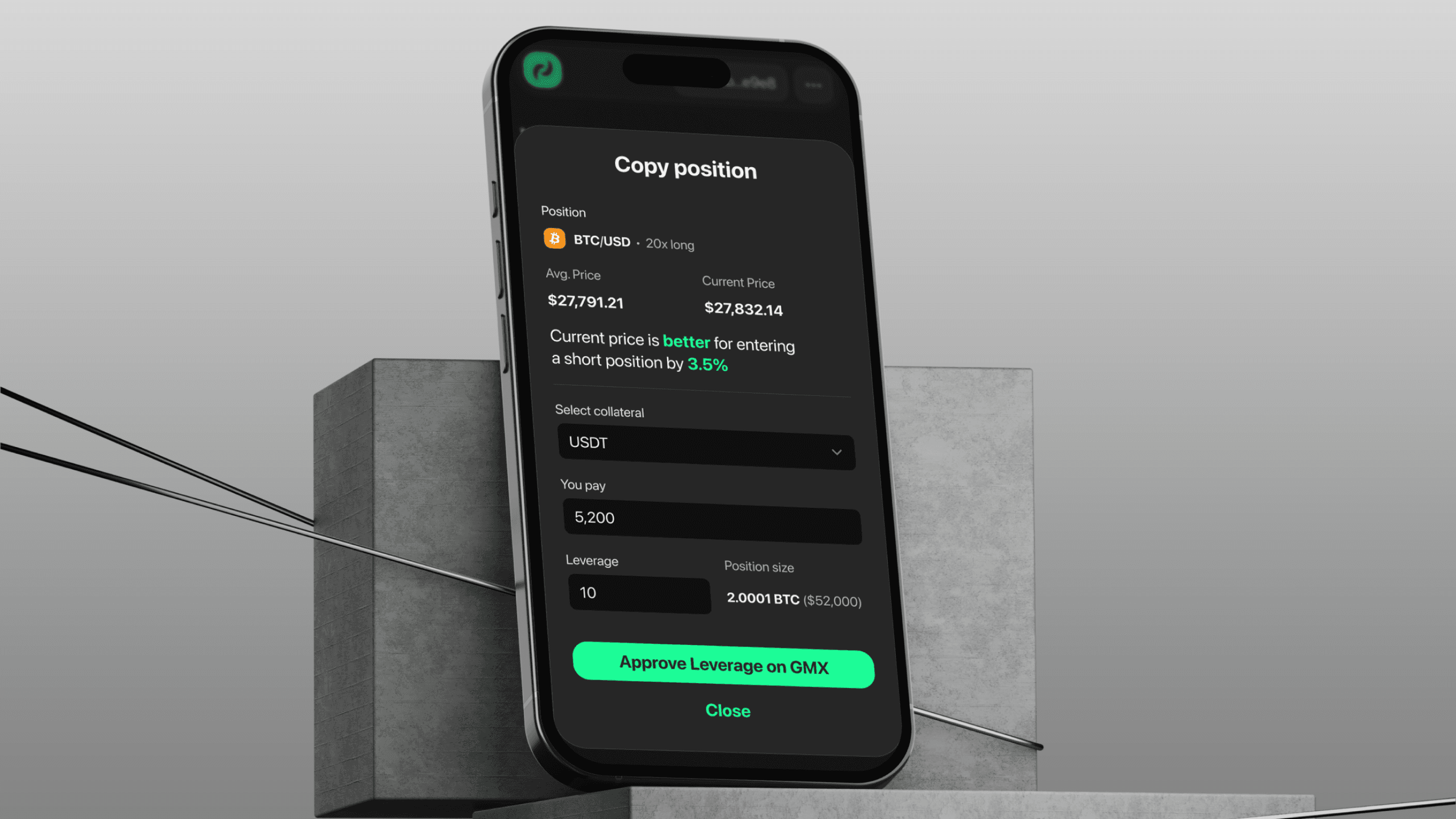
Problem & Solution
Problem
DeFi investors often rely on fragmented dashboards, Twitter insights, or manual wallet tracking tools. This leads to information overload with no unified view of trader performance, high risk when copying trades blindly without understanding drawdowns or leverage, and lack of trust in automated trading tools due to opaque algorithms. Users needed a reliable, data-driven way to follow and copy successful traders while staying in control of their risk.
Solution
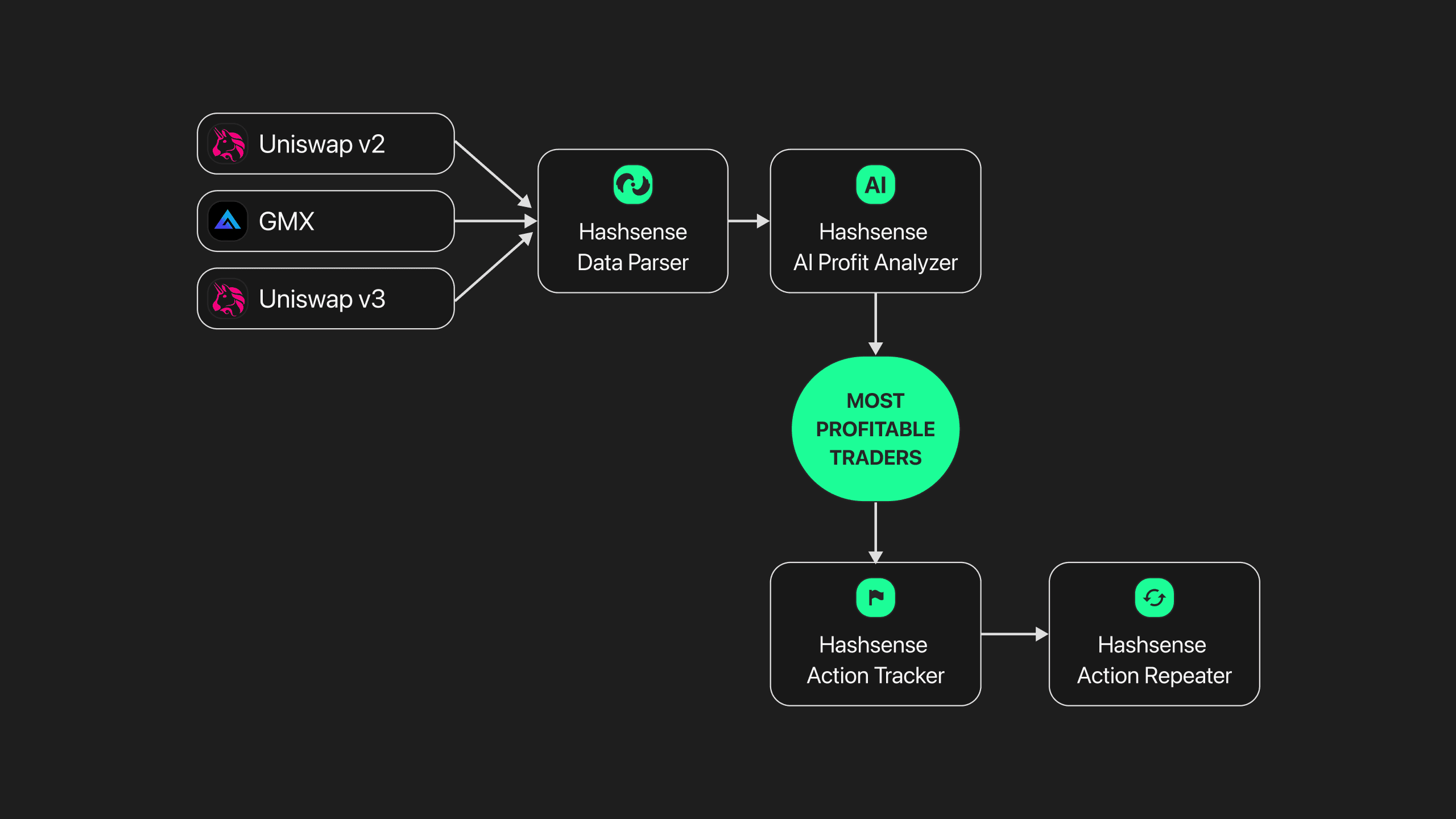
Hashsense introduced a set of smart tools:
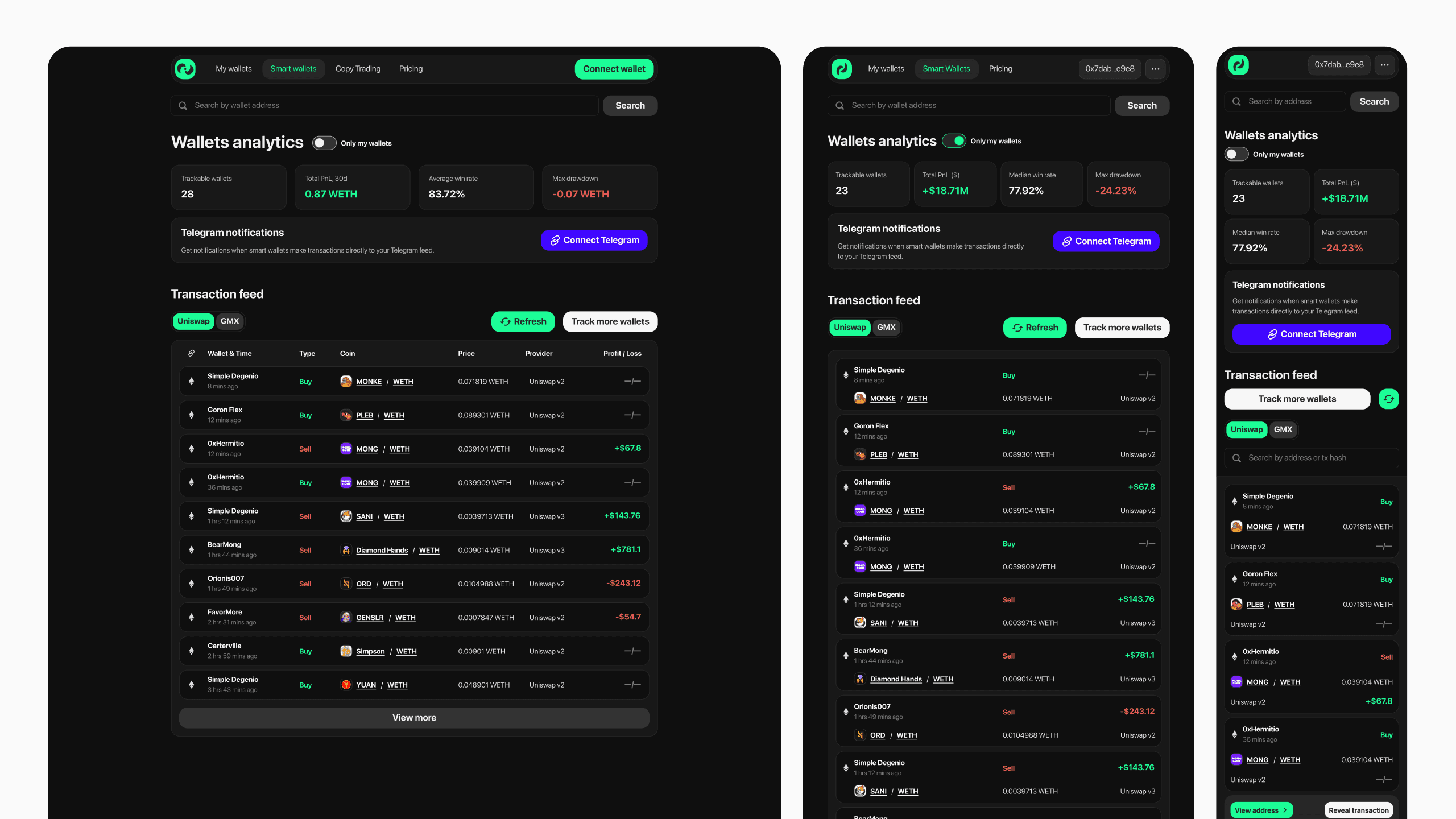
Smart Wallet Analytics with unified 30-day PnL, win rate, and drawdown;
Action Tracker for real-time trade feeds;
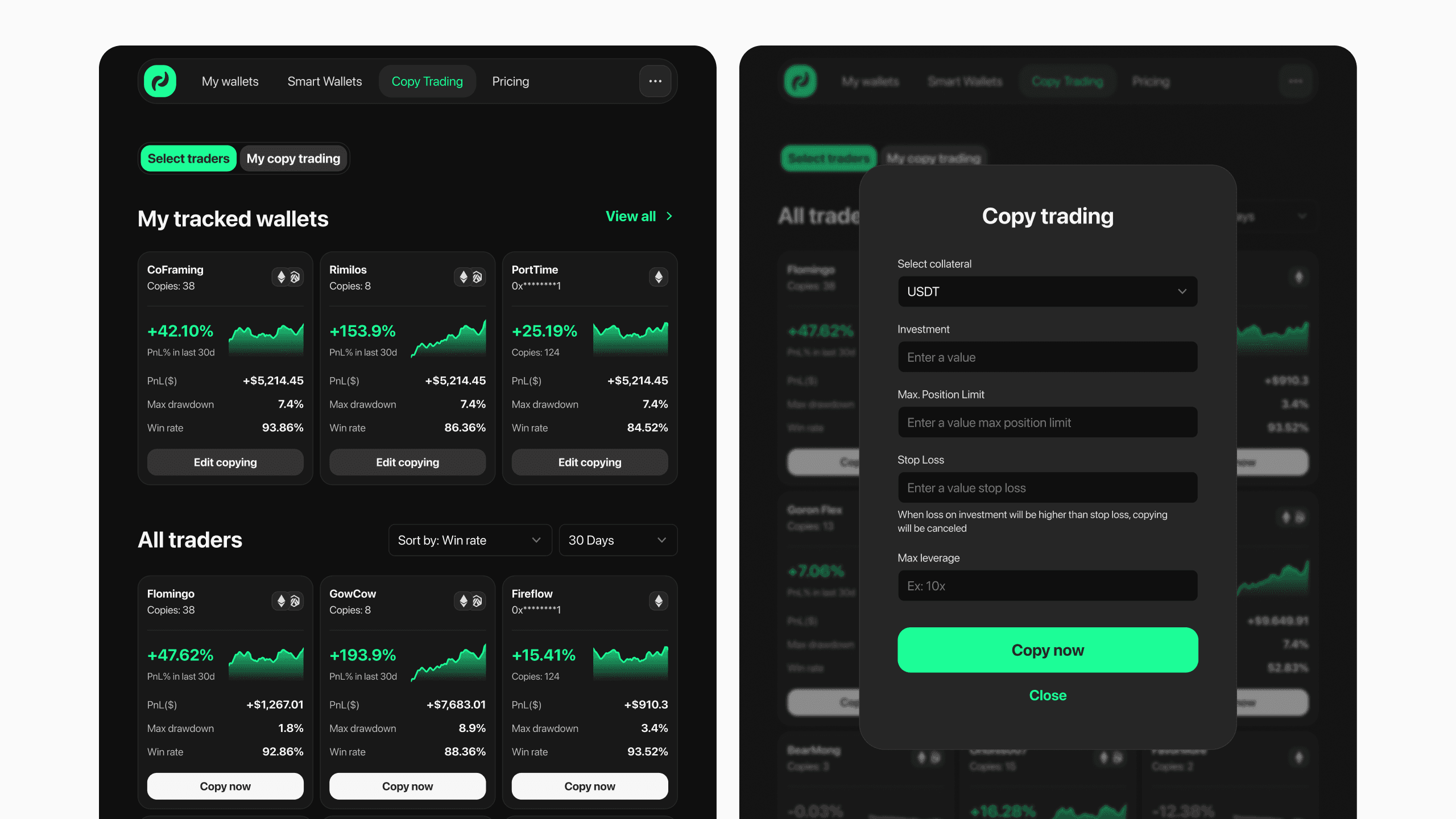
Copy Trading Modal with personalized risk settings;
AI Profit Analyzer;
Vault Automation for auto-staking;
Telegram/Discord Alerts for timely notifications.
Key Metrics
64%
Tracked wallet in first session
27%
Executed a copy trade
38%
Alert engagement rate
+40%
Trust in copy trading
1
User Interviews & Competitive Research
Conducted 12 user interviews with DeFi traders and yield farmers. Analyzed competitors: DeBank, Nansen, and Zapper. Findings revealed users wanted fewer charts and more context on why a trader performs well — specifically drawdowns, position size, and time since entry.
2
Market Research
DeFi market had recovered to ~$50B TVL in early 2023. Existing analytics (Nansen, DeBank, Zapper) focused on surface-level wallet tracking. Copy-trading platforms (dHEDGE, Kopi) lacked transparency with limited control over position sizing, leverage, or drawdown.
3
Key Insight Discovery
Users constantly switch between multiple dashboards and Telegram bots. 7 out of 10 respondents hesitate to copy trades due to unclear performance metrics. 64% wanted faster, simplified notifications for trader actions instead of generic transaction feeds.
4
Information Architecture & Design
Collaborated with engineers and data analysts to translate complex blockchain data into clear, actionable experiences. Designed the Copy Trading dashboard, wallet analytics page, pricing page, and user-copied strategies view with clear risk parameters.
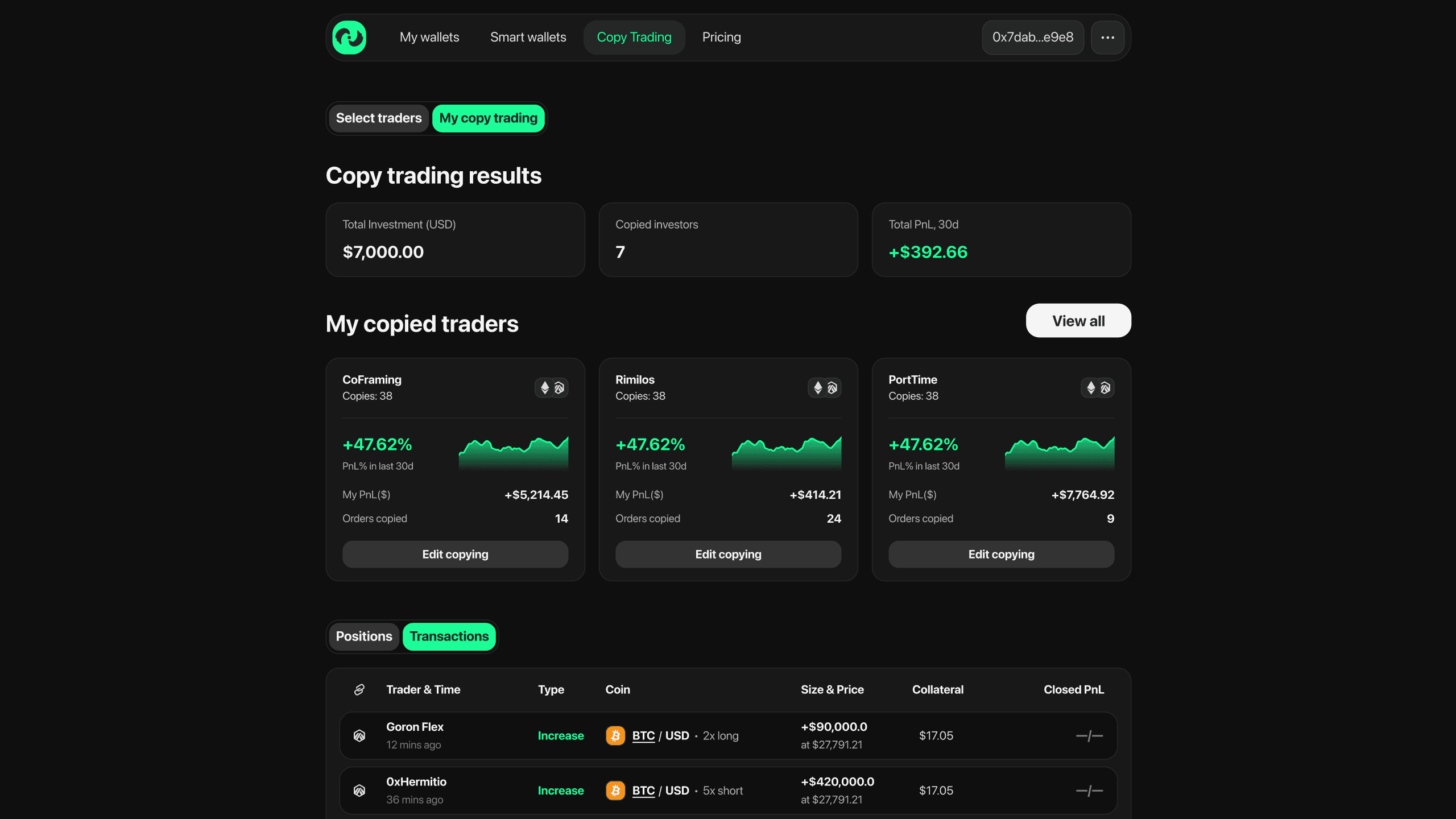
Translating complex on-chain data into intuitive, actionable displays
Building trust for copy-trading through transparent risk controls
Balancing advanced trading features with accessibility for retail users
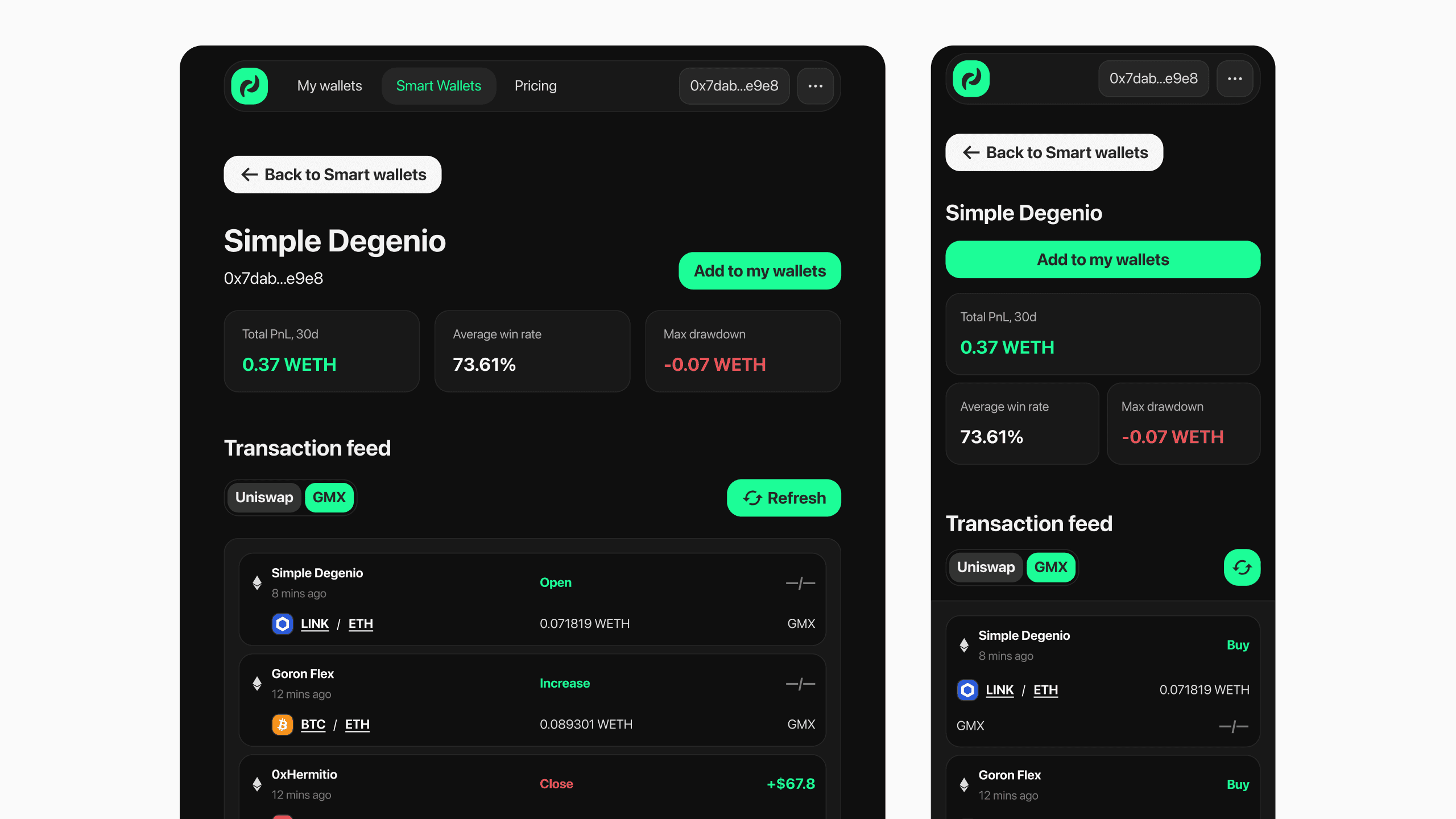

Working on Hashsense taught me how to design for trust and clarity in complex financial systems. I learned to simplify data-heavy interfaces without losing depth, prioritize user safety through transparent defaults, and balance advanced trading features with accessibility for a broader audience.
