Job Search App
Role
Product Designer
Year
2025-2026
Client
NDA
Platform
iOS, Android
Overview
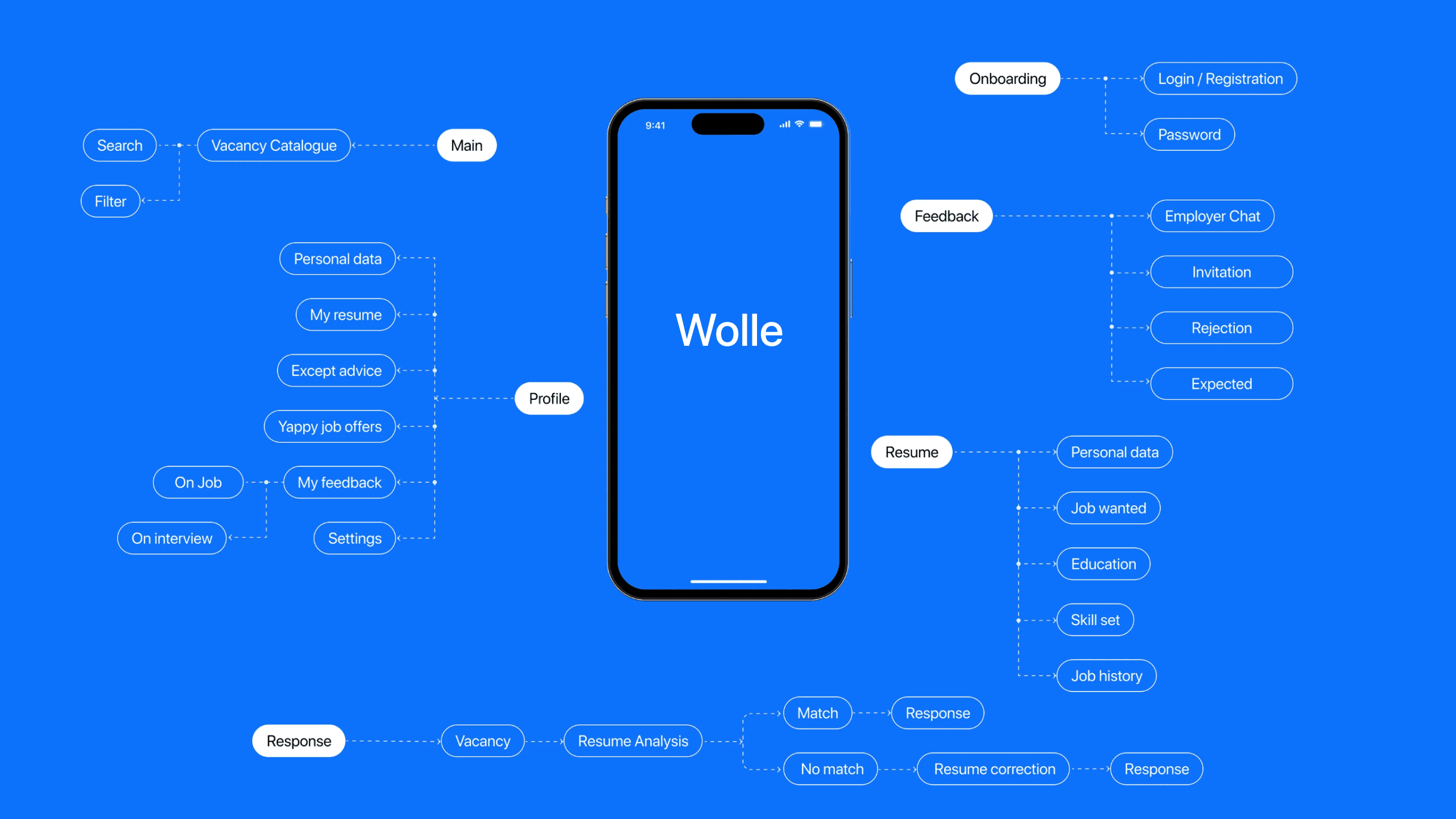
Wolle is an MVP app for a Russian client that helps young professionals find jobs aligned with their goals, values, and lifestyle. As Product Designer, I conducted user research, created personas, mapped user journeys, and developed wireframes, prototypes, and tests. The result is a clear, user-friendly interface that transforms job hunting into a personalized, motivating experience — distinguishing Wolle from generic job boards through transparency and human-centered design.

Problem & Solution
Problem
Traditional job platforms overwhelm users with irrelevant listings, unclear communication with employers, and low trust. The market is dominated by HeadHunter, SuperJob, and Rabota.ru — yet user dissatisfaction remains high due to data security issues, fake postings, and poor post-application communication. Young professionals felt invisible: resumes sent with no feedback, and platforms built to serve companies rather than job seekers.
Solution
Wolle was designed as a human-centered platform focused on clarity, transparency, and motivation. The solution combines personalized job recommendations, guided resume creation, and direct in-app communication with recruiters. Smart matching algorithms, verified company profiles, and real-time progress tracking transform job hunting from a confusing, discouraging experience into a clear, empowering journey. Every design decision reduces user effort, provides instant feedback, and builds trust.
Key Metrics
80%
User satisfaction rate
45%
Onboarding simplified
94%
Task success rate
15
Usability test participants
1
Design Thinking Framework
Followed the full Design Thinking process — Empathize, Define, Ideate, Prototype, Test. Ran user testing with 15 participants and incorporated their feedback into design iterations, resulting in an 80% satisfaction rate.
2
Market Research
The Russian job-search market is dominated by HeadHunter, SuperJob, and Rabota.ru (80%+ market share). Key finding: 52% of users search for jobs through digital platforms (10% YoY growth), messenger-based recruitment is growing 3% yearly among IT and creative professionals — signaling a clear shift toward mobile-first, conversational hiring.
3
User Research & Competitive Benchmarking
Conducted supervised user research with active job seekers and benchmarked LinkedIn Jobs, hh.ru, and SuperJob. Core pain points emerged: users never receive feedback on submitted resumes, and existing platforms prioritize employer needs over candidate experience. Created detailed personas and user journey maps to guide design decisions.
4
MVP Feature Design
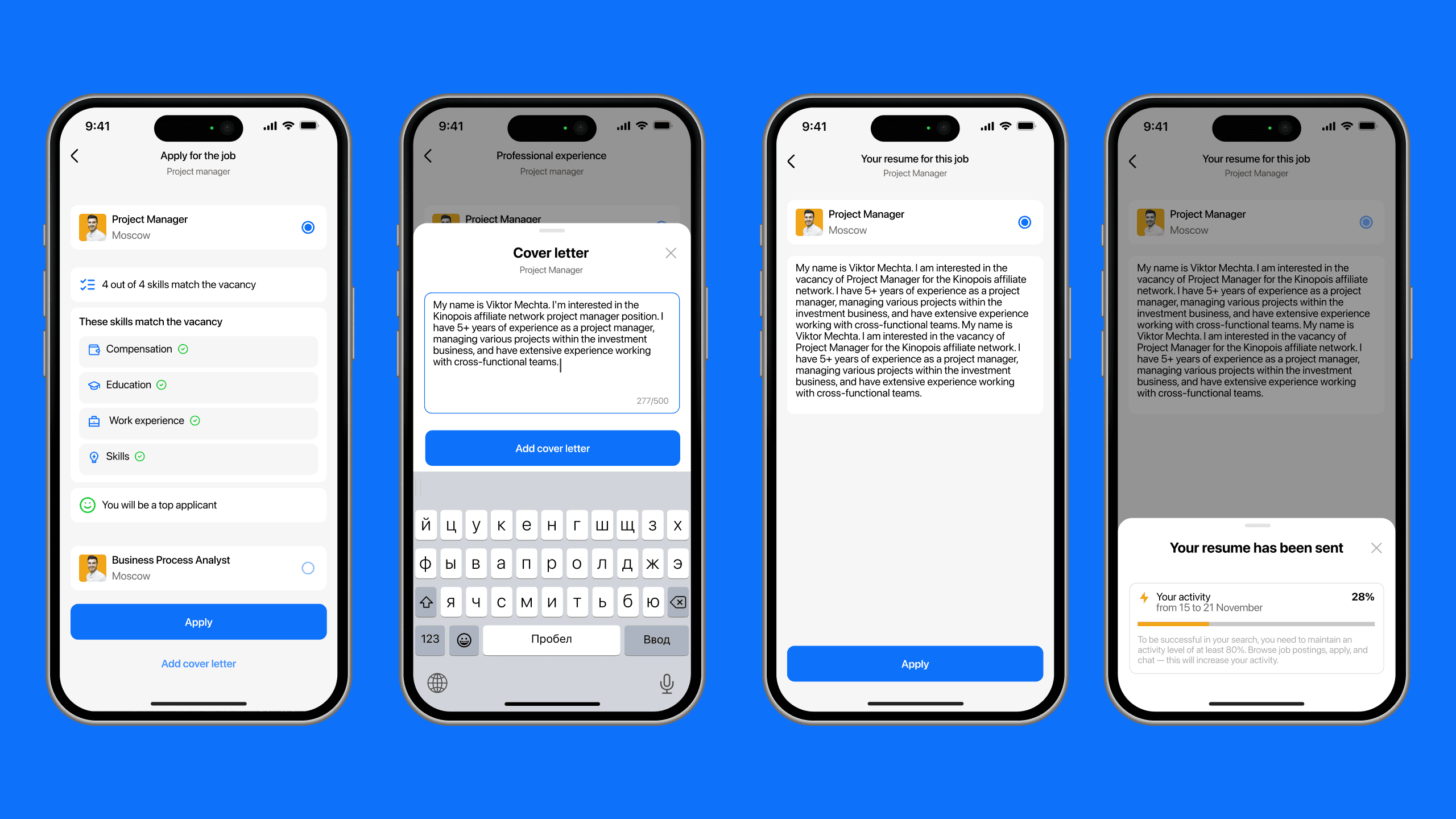
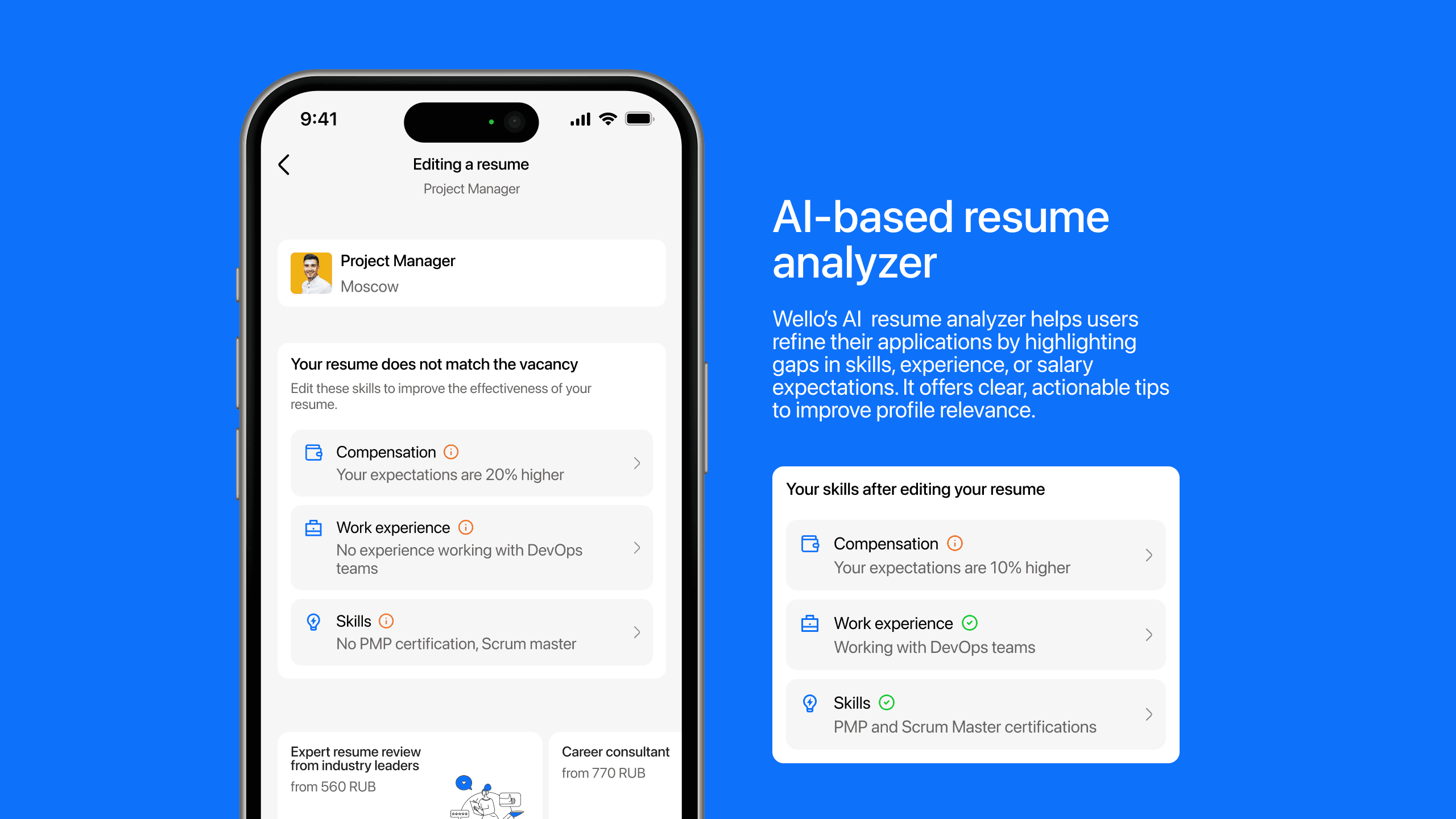
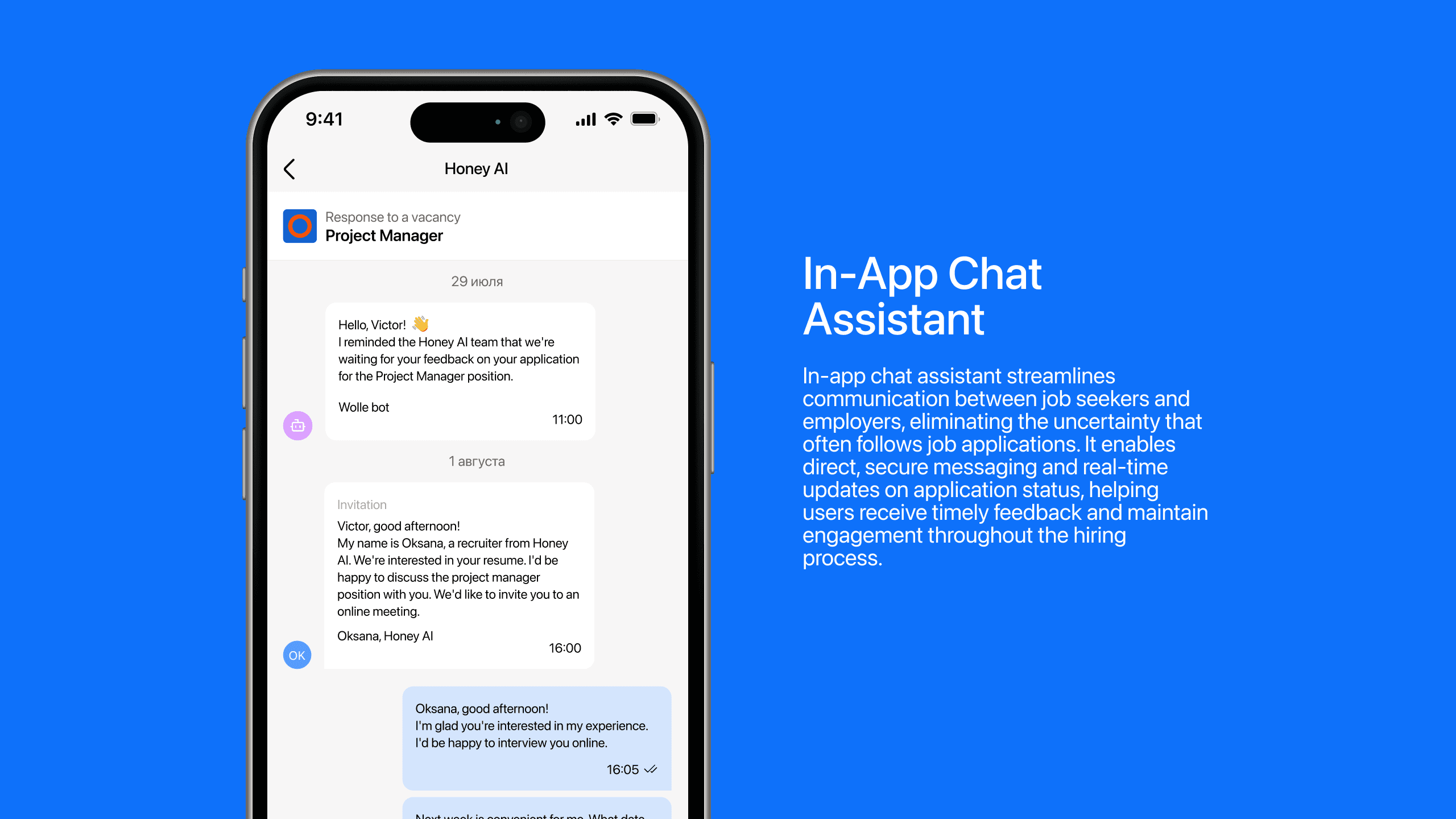
Identified three core features to directly address pain points: a Verified Employer Badge with company background checks to combat fake postings; an AI-based Resume Analyzer matching user profiles with job descriptions; and an In-app Chat Assistant facilitating real-time feedback between users and employers.
5
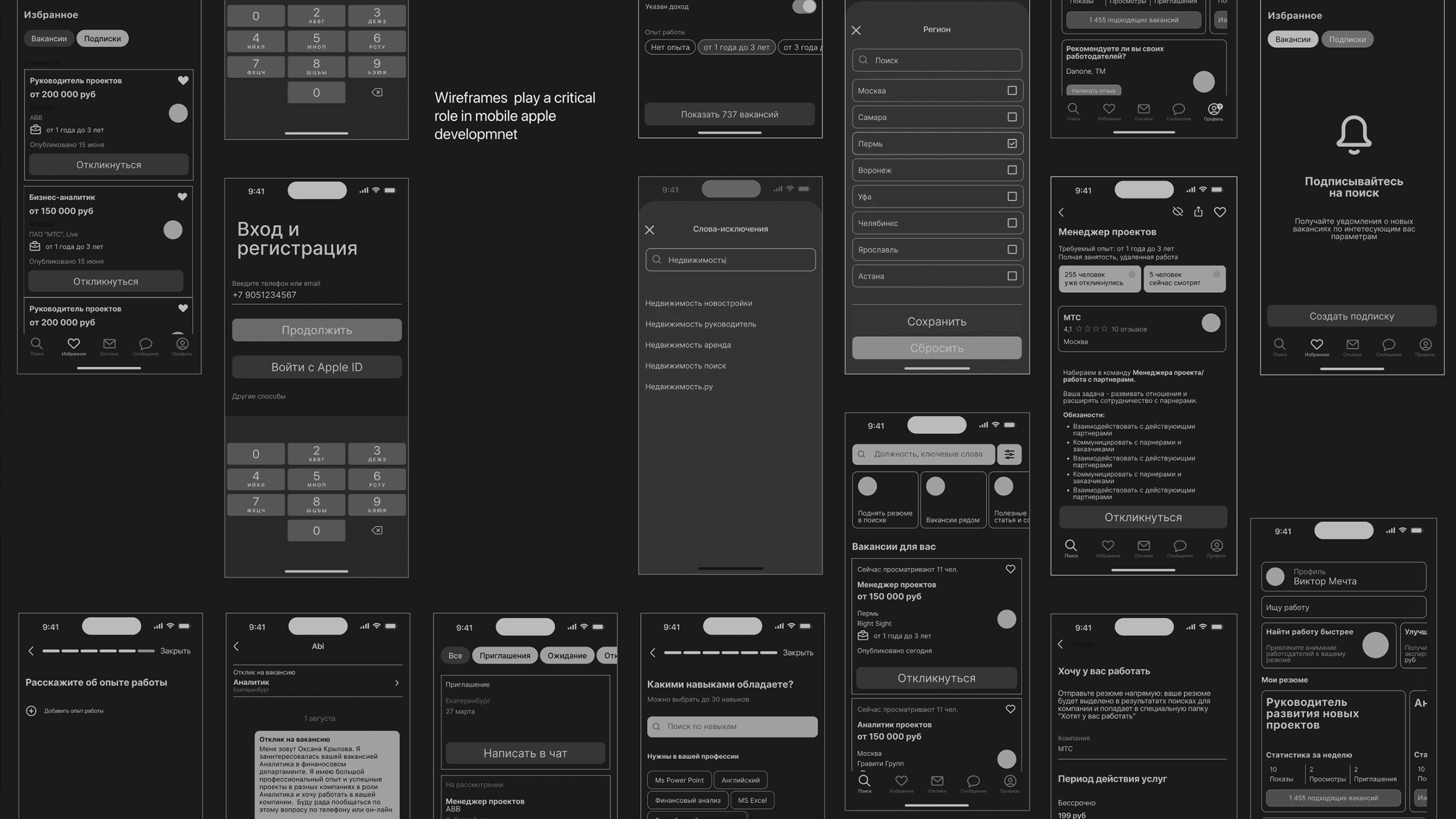
Wireframes, Prototyping & User Testing
Created two key user flow scenarios: 'Applying to a job where the resume matches' and 'Applying where it doesn't match.' Built interactive digital prototypes tested with 15 participants, then ran a card sorting exercise to identify common themes and refine navigation and hierarchy.

Standing out in a market where three players hold over 80% market share
Building trust in a space plagued by fake postings and poor post-application communication
Balancing the needs of both job seekers and employers in a dual-sided marketplace
Working on this project strengthened my ability to connect business goals with real user needs. I learned how to apply data-driven design decisions while maintaining empathy throughout the process. Most importantly, this project taught me how to design with trust in mind — creating experiences that empower users rather than overwhelm them. I would expand future testing to include recruiters and mid-career professionals to better balance both sides of the hiring experience.